International Workshop on Federated Learning in the Age of Foundation Models
In Conjunction with IJCAI 2026 (FL@FM-IJCAI'26)


Final Submission Deadline: 07 May, 2026 (23:59:59 AoE)
Notification Due: 01 June, 2026 (23:59:59 AoE)
Workshop Date: Sunday, 16 August, 2026
Venue: Room WS Room 17, Congress Centrum Bremen (CCB), Bremen, Germany


Workshop Program (Sunday, August 16, 2026)

  
Time Activity
  
09:00 – 09:10 Opening Remarks
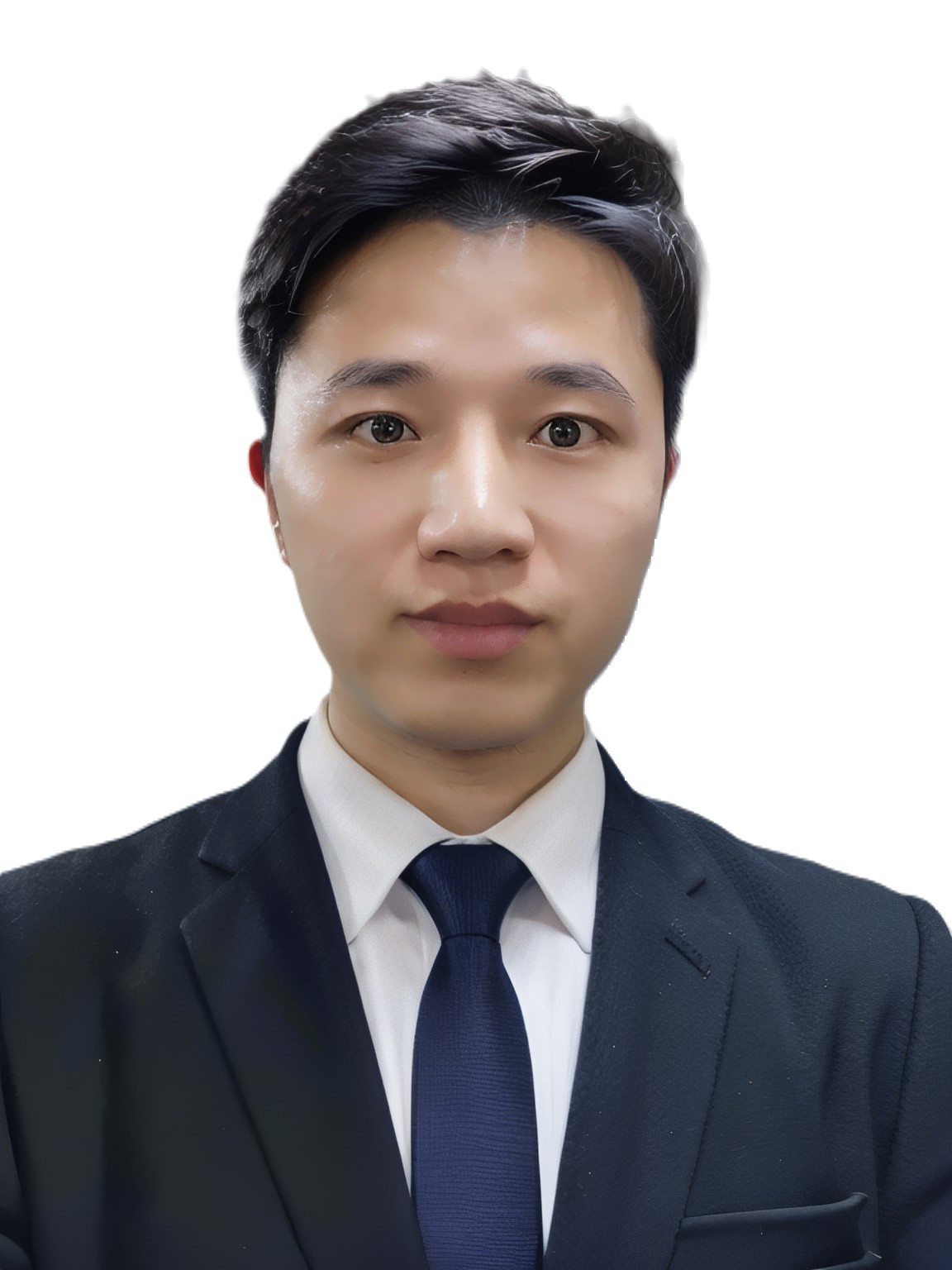
09:10 – 09:50 Keynote 1: Towards Federated Graph Intelligence: From Representation Learning to AI Agents, by Xuemin Yan
09:50 – 10:30 Keynote 2: FedEvoQ: Evolutionary Diversity Probing for Data-Quality-Aware Federated Aggregation, by Leming Wu
10:30 – 11:00 Coffee Break
11:00 – 12:30 Oral Presentation Session (9 min per talk, including Q&A)
  1. Qiang Lin, Xiaoyan Sun, Yao Hu and Wei Fang. EvoCSFL: Surrogate-Assisted Evolutionary Client Selection for Efficient and Robust Federated Learning
  2. Usman Haider and Karl Mason. Constraint-Aware Aggregation for Federated Reinforcement Learning in Microgrid Energy Coordination
  3. Claudia Großer, Maike Heuer, Denis Krompaß and Thomas A. Runkler. Evaluating Federated Pre-Training: On the Reliability of Downstream Fine-Tuning and Intrinsic Evaluation
  4. Kiran Naseer and Dr Umar Shoaib. When More Parameters Hurt: Foundation Model Priors Amplify Worst-Client Disparity Under Extreme Federated Heterogeneity
  5. Priyanka Nihalchandani, Naman Srivastava, Varun Ojha and Pandarasamy Arjunan. Personalized Federated Sparse Adaptation of Time-Series Foundation Models
  6. Sunny Gupta, Shambhavi Shanker and Amit Sethi. Amortizing Federated Adaptation: Hypernetwork Driven LoRA for Personalized Foundation Models
  7. Alvaro Javier Vargas Guerrero, Xinguang Wang, Quang Manh Doan and Guy Nagels. Beyond Weights and Gradients: A Taxonomy of Federated Learning Messages
  8. Nikita Agrawal and Ruben Mayer. Federated Foundation Language Model Post-Training Should Focus on Open-Source Models
  9. Ajay Menon Kannanthodath Induchoodan, Christian Prehofer, Yunfei Xu and Toru Hirano. FedSPC: Shared Parameter Correction for Personalized Federated Learning
  10. Mubarak Ojewale, Adriana E. Chis, Jorge Mario Cortes-Mendoza, Bernardo Pulido-Gaytan and Horacio Gonzalez-Velez. FlashbackCL: Mitigating Temporal Forgetting in Federated Learning
12:30 End of Workshop
   

Keynotes


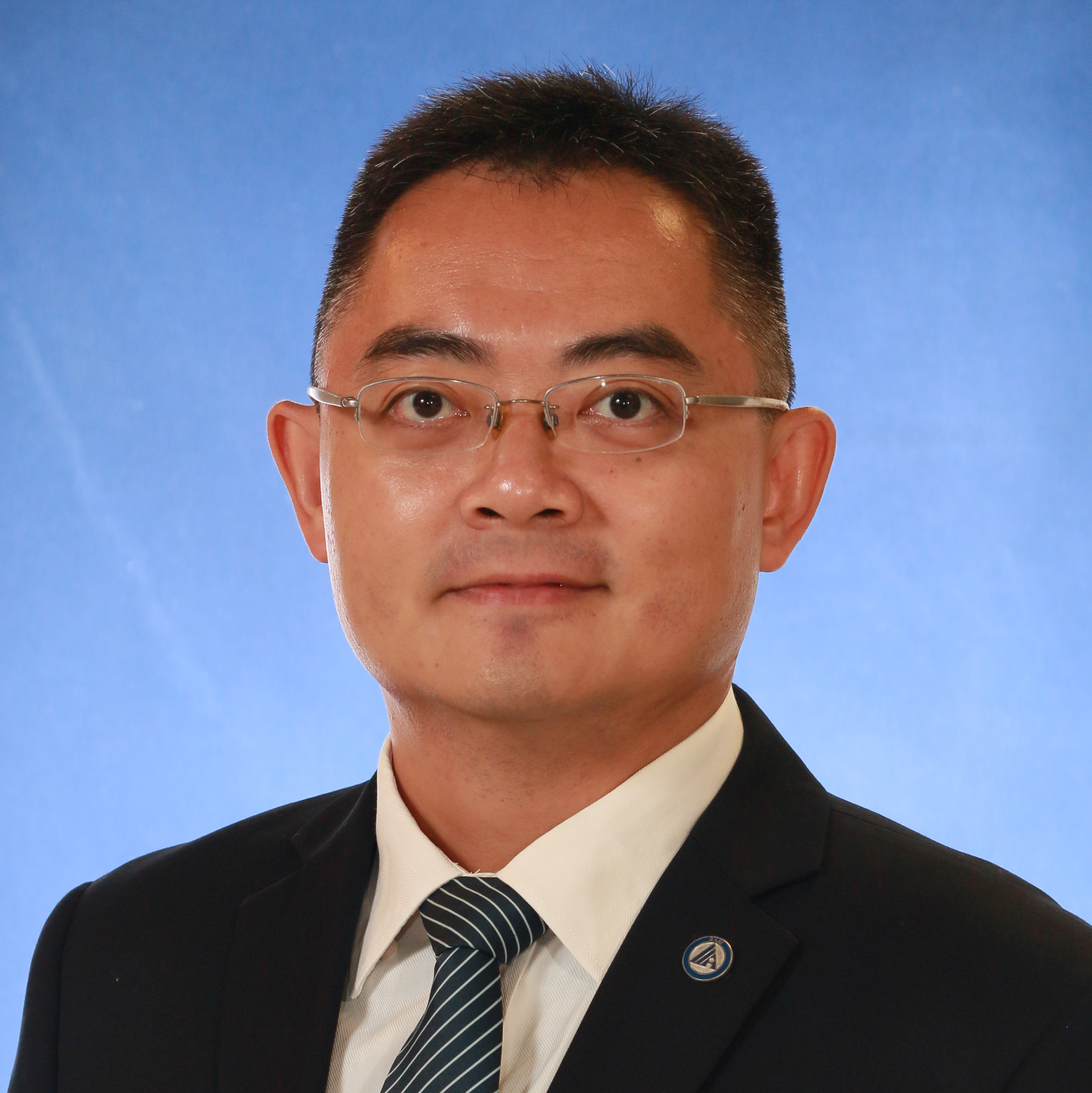
Title: Towards Federated Graph Intelligence: From Representation Learning to AI Agents

Speaker: Xueming Yan, Professor, Guangdong University of Foreign Studies, China

Biography
Xueming Yan is a Full Professor and a Yunshan Young Scholar (Grade A) at the School of Information Science and Technology and the School of Cyber Security, Guangdong University of Foreign Studies (GDUFS), China. Her research interests include intelligent optimization, neural architecture search, and AI systems for multilingual, multimodal, and cross-cultural applications. As Principal Investigator (PI) on multiple national-level grants, including those from the National Natural Science Foundation of China (NSFC), Dr. Yan has published over 40 papers in premier venues such as IEEE TEVC, IEEE TMM, IEEE TPAMI, IEEE TNNLS, IEEE TETCI, IEEE SMC-A, IEEE TBD, IEEE CIM, Information Fusion, NeurIPS, and IJCAI. She serves as an Associate Editor for Neurocomputing, and Complex & Intelligent Systems. She is a Senior Member of IEEE and currently serves as Secretary of the IEEE CIS Guangzhou Chapter.


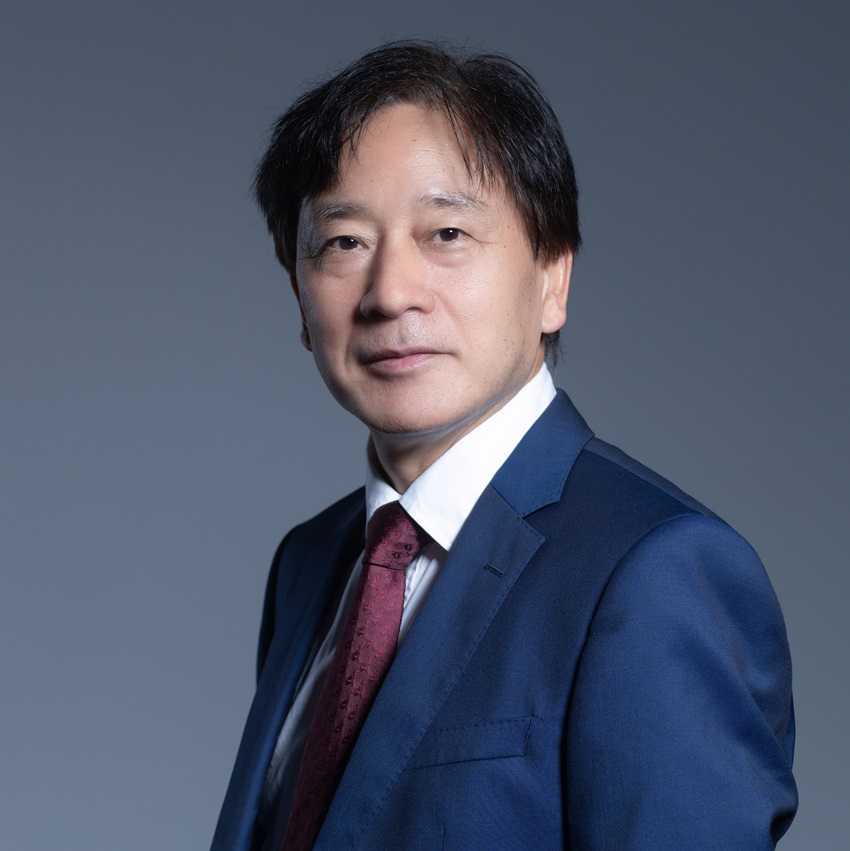
Title: FedEvoQ: Evolutionary Diversity Probing for Data-Quality-Aware Federated Aggregation

Speaker: Leming Wu, Lecturer, Shanghai University of International Business and Economics, China

Biography
Leming Wu received his Ph.D. in Control Science and Engineering and is a master’s supervisor at Shanghai University of International Business and Economics. His research focuses on trustworthy federated learning. He completed his Ph.D. under the supervision of Professor Yaochu Jin. In 2024, he conducted government-sponsored joint doctoral research at Nanyang Technological University, Singapore, under the co-supervision of Professor Han Yu. He received the National Scholarship for Doctoral Students and the Outstanding Thesis Award from the Shanghai Society of Image and Graphics. He was also named an Outstanding Graduate of Shanghai twice. He has published more than ten papers as the first or corresponding author in SCI Q1 journals and CCF-recommended conferences. He is the first inventor of two granted Chinese invention patents and has led an industry-funded research project.


Accepted Papers

  1. Qiang Lin, Xiaoyan Sun, Yao Hu and Wei Fang. EvoCSFL: Surrogate-Assisted Evolutionary Client Selection for Efficient and Robust Federated Learning
  2. Usman Haider and Karl Mason. Constraint-Aware Aggregation for Federated Reinforcement Learning in Microgrid Energy Coordination
  3. Claudia Großer, Maike Heuer, Denis Krompaß and Thomas A. Runkler. Evaluating Federated Pre-Training: On the Reliability of Downstream Fine-Tuning and Intrinsic Evaluation
  4. Kiran Naseer and Dr Umar Shoaib. When More Parameters Hurt: Foundation Model Priors Amplify Worst-Client Disparity Under Extreme Federated Heterogeneity
  5. Mubarak Ojewale, Adriana E. Chis, Jorge Mario Cortes-Mendoza, Bernardo Pulido-Gaytan and Horacio Gonzalez-Velez. FlashbackCL: Mitigating Temporal Forgetting in Federated Learning
  6. Priyanka Nihalchandani, Naman Srivastava, Varun Ojha and Pandarasamy Arjunan. Personalized Federated Sparse Adaptation of Time-Series Foundation Models
  7. Sunny Gupta, Shambhavi Shanker and Amit Sethi. Amortizing Federated Adaptation: Hypernetwork Driven LoRA for Personalized Foundation Models
  8. Alvaro Javier Vargas Guerrero, Xinguang Wang, Quang Manh Doan and Guy Nagels. Beyond Weights and Gradients: A Taxonomy of Federated Learning Messages
  9. Nikita Agrawal and Ruben Mayer. Federated Foundation Language Model Post-Training Should Focus on Open-Source Models
  10. Ajay Menon Kannanthodath Induchoodan, Christian Prehofer, Yunfei Xu and Toru Hirano. FedSPC: Shared Parameter Correction for Personalized Federated Learning

Call for Papers

Foundation models (FMs) are typically associated with large language models (LLMs), like ChatGPT, and are characterized by their scale and broad applicability. While these models provide transformative capabilities, they also introduce significant challenges, particularly concerning dis-tributed model management and related data privacy, efficiency, and scalability. The training of foundation models is data and resource intensive and the conventional methods are typically centralized; this creates significant challenges including regulatory and privacy concerns in real-world use cases. These include distributed training data, computational resources to manage distributed data repositories, and development of and alignment with regulatory guidelines (e.g., GDPR) that restrict sharing sensitive data.

Federated learning (FL) is an emerging paradigm that can mitigate these challenges by training a global but distributed model using distributed data. The extensive application of machine learning to analyze and draw insight from real-world, distributed, and sensitive data necessitates familiarity with and adoption of this relevant and timely topic within the general scientific community. As FL allows self-interested data owners to collaboratively train models, end-users can become co-creators of AI solutions. By adopting federated learning approaches, we can leverage distributed data and computing power available across different sources while respecting user privacy.

The rise of FMs amplifies the importance and relevance of FL as a crucial research direction. With FMs becoming the norm in machine learning development, the focus shifts from model architecture design to tackling the issues surrounding privacy-preserving and distributed learning. Advancements in FL methods have the potential to unlock the use of FMs, enabling efficient and scalable training while safeguarding sensitive data.

FMs such as GPT-4 encoded with vast knowledge and powerful emergent abilities have achieved remarkable success in various natural language processing and computer vision tasks. Grounding FMs by adapting them to domain-specific tasks or augmenting them with domain-specific knowledge enables us to exploit the full potential of FMs. However, grounding FMs faces several challenges, stemming primarily from constrained computing resources, data privacy, model heterogeneity, and model ownership. Federated Transfer Learning (FTL), the combination of FL and transfer learning, provides promising solutions to address these challenges. In recent years, the need for grounding FMs leveraging FTL, coined FTL-FM, has arisen strongly in both academia and industry.

This workshop will also explore novel methods for multimodal data integration in evolutionary algorithms, including multimodal representation learning, cross-modal feature fusion, and hybrid EC-deep learning approaches. We welcome contributions on theoretical foundations, algorithm design, benchmark development, and applications across areas, such as robotics, smart manufacturing, healthcare, and environmental monitoring. We aim to bring together researchers from evolutionary computation, machine learning, computer vision, and application domains to address key questions

With this in mind, we invite original research contributions, position papers, and work-in-progress reports on various aspects of federated learning in the era of foundation models. Since the emergence of foundation models has been a rela-tively recent phenomenon, their full impact on federated learning has not yet been well explored or understood. We hope to provide a platform to facilitate interaction among students, scholars, and industry professionals from around the world to discuss the latest advancements, share insights, and identify future directions in this exciting field.

This workshop aims to bring together academic researchers and industry practitioners to address open issues in this interdisciplinary research area. For industry participants, we intend to create a forum to communicate problems are practically relevant. For academic participants, we hope to make it easier to become productive in this area. The workshop will focus on the theme of combining FL with FM to open up opportunities to address new challenges. The workshop topics include but are not limited to:
Theory and algorithmic foundations:
  • Agentic AI on Foundation Models
  • Impact of heterogeneity in FL of large models
  • Multi-stage model training (e.g., base model + fine tuning)
  • Optimization advances in FL (e.g., beyond first-order and local methods)
  • Prompt tuning in federated settings
  • Self-supervised learning in federated settings
Leveraging foundation models to improve federated learning:
  • Adaptive aggregation strategies for FL in heterogeneous environments
  • Foundation model enhanced FL knowledge distillation
  • Overcoming data interoperability challenges using foundation models
  • Personalization of FL with foundation models
Federated learning for training and tuning foundation models:
  • Fairness, bias, and interpretability challenges in FL with foundation models
  • Federated transfer learning with foundation models
  • FL techniques for training large-scale foundation models
  • Hardware for FL with foundation models
  • Optimization algorithms for federated training of foundation models
  • Privacy-preserving mechanisms in FL with foundation models
  • Resource-efficient FL with foundation models
  • Security and robustness considerations in FL with foundation models
  • Systems and infrastructure for FL with foundation models
  • Vertical federated learning with foundation models
  • Vulnerabilities of FL with foundation models

More information on previous workshops can be found here.


Submission Instructions

Each submission can be up to 7 pages of contents plus up to 2 additional pages of references and acknowledgements. The submitted papers must be written in English and in PDF format according to the IJCAI'26 template. All submitted papers will be under a single-blind peer review for their novelty, technical quality and impact. The submissions can contain author details. Submission will be accepted via the Easychair submission website.

Based on the requirement from IJCAI'26, at least one author of each accepted paper must travel to the IJCAI venue in person. In addition, multiple submissions of the same paper to more than one IJCAI workshop are forbidden.

Easychair submission site: https://easychair.org/conferences/?conf=flfm-ijcai-26

For enquiries, please email to: flfm-ijcai-26@easychair.org


Workshop Chairs


Han Yu
(NTU)
   

Guodong Long
(UTS)
   

Xueming Yan
(GDUFS)
   

Yaochu Jin
(Westlake U)
   

Program Committee

  • Alysa Ziying Tan (Alibaba-NTU Singapore Joint Research Institute)
  • Haizhou Wang (Nanyang Technological University)
  • Hongyi Peng (Nanyang Technological University)
  • Jiankai Sun (The Ohio State University)
  • Paulo Ferreira (Dell Technologies)
  • Saurabh Farkya (SRI international)
  • Siwei Feng (Soochow University)
  • Xiaohu Wu (NERCMNT)
  • Xiaoyan Liu (China University of Petroleum)
  • Xu Guo (Nanyang Technological University)
  • Yang Zhang (Nanjing University of Aeronautics and Astronautics)
  • Yudi Xiong (Shenzhen University)
  • Zehan Lin (South China University of Technology)
  • Zhuang Qi (Shandong University)

Organized by